

Cart 0
Reducing Warehouse Dust by 90%: Dust Stop Technology Guide
Sweeping a warehouse floor should make it cleaner. The problem is that with conventional cleaning equipment, it often makes the air worse at the same time. Every time a side brush spins, it doesn’t just collect debris, it also sends fine dust particles up into the air around the machine. In a busy warehouse where sweeping happens regularly, that airborne dust adds up quickly and creates problems that go well beyond a dirty floor. Hako’s Dust Stop technology was developed specifically to solve this, reducing dust generation during dry sweeping by up to 90% compared to conventional side brushes. This guide explains how it works, why it matters for warehouse environments and which machines it’s available on.
Why Conventional Sweeping Makes Warehouse Dust Worse
The side brushes on a sweeper are designed to guide debris from the edges of the floor towards the main brush and collection system. They do this job well, but the spinning action that makes them effective at collecting debris also generates a continuous flow of disturbed air around the brush. In dusty warehouse environments, that airflow lifts fine particulates off the floor and disperses them into the surrounding area rather than collecting them.
The result is a cleaning process that tackles visible debris but simultaneously redistributes fine dust particles into the air, onto shelving, stock, machinery and into the lungs of anyone working nearby. In environments like logistics centres, manufacturing facilities and distribution warehouses where floors are large, heavily used and swept frequently, this is a significant and ongoing problem. Poor air quality and dust-covered surfaces have a direct effect on operational efficiency, equipment longevity and staff wellbeing, which is why cleaning in logistics environments deserves more strategic attention than it often gets.
What Is Hako Dust Stop and How Does It Work
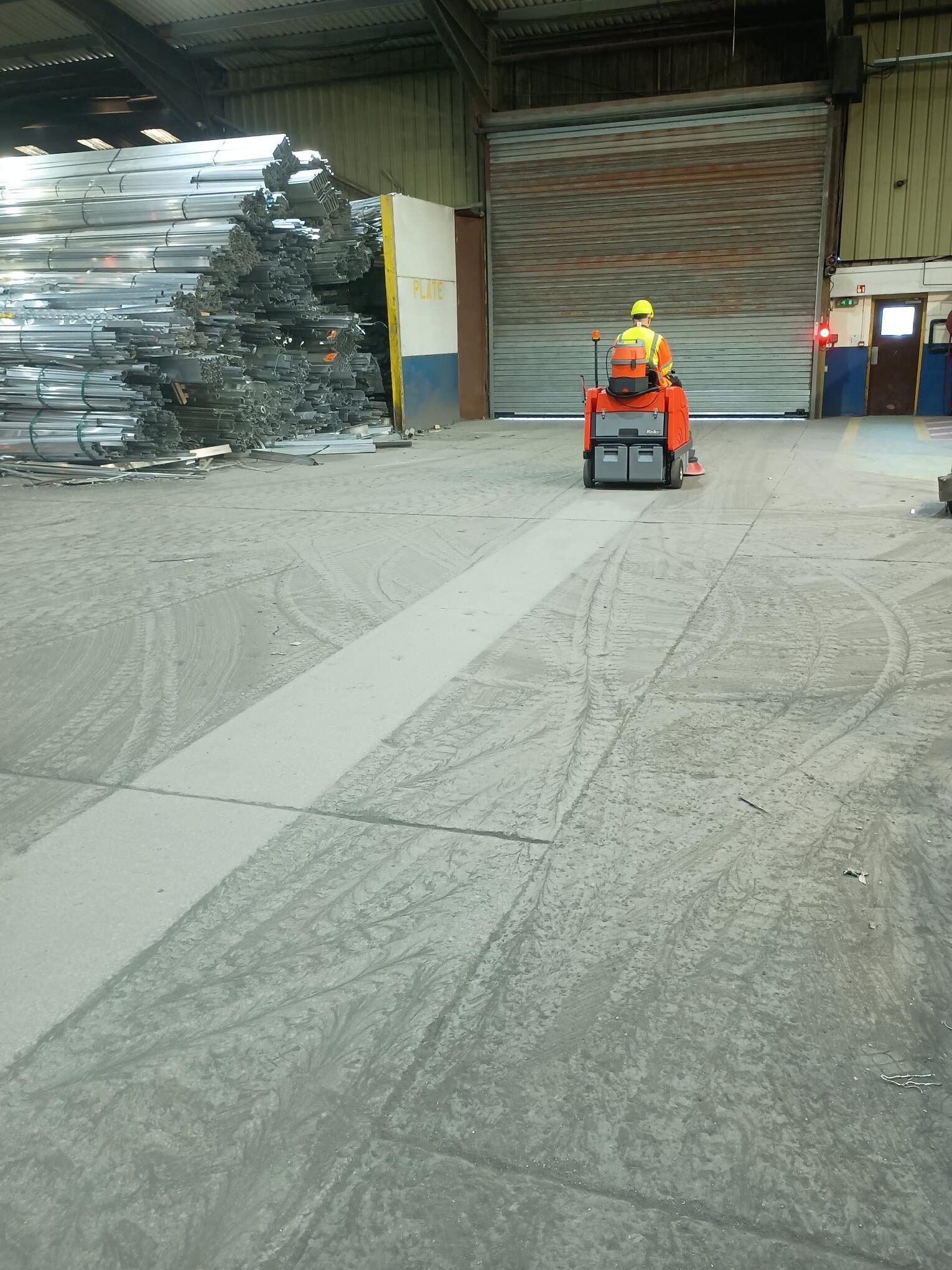
Dust Stop is a side brush jacket developed by Hako engineers and tested in wind tunnel conditions. The idea behind it is straightforward: rather than trying to capture dust after it’s already in the air, the jacket stops it from becoming airborne in the first place.
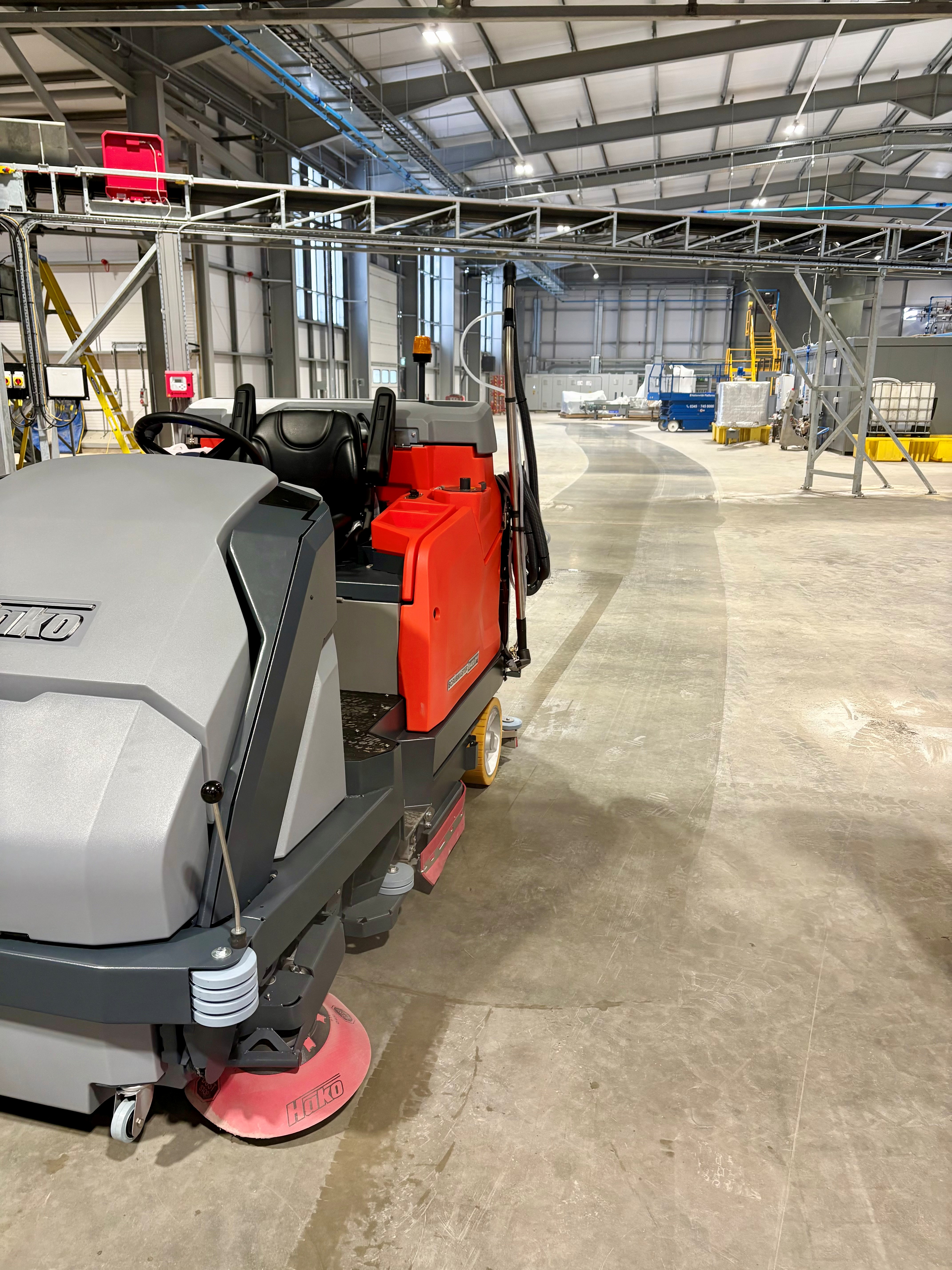
It works by enclosing the side brushes of compatible sweeper models in a cover made from high-quality Linatex material. The brush still spins and sweeps debris towards the collection system exactly as normal, but the jacket cuts off the airflow that the spinning action would otherwise create. Without that airflow, dust stays on the floor surface instead of being thrown into the surrounding air. The sweeping performance stays the same. The dust generated drops by up to 90% compared to conventional side brushes.
What Does 90% Less Dust Mean for Your Warehouse
Reducing warehouse dust by up to 90% during sweeping isn’t just a cleanliness improvement. It has practical consequences across multiple areas of warehouse operations that are worth understanding clearly.
How Dust Stop Improves Air Quality and Protects Worker Health
Fine dust in enclosed working environments is a health risk. Prolonged exposure to airborne particles contributes to respiratory conditions and employers have legal obligations around workplace air quality under Health and Safety Executive guidelines. Reducing dust at the source is one of the most effective ways to meet those obligations and Dust Stop does exactly that by stopping dust from becoming airborne rather than relying on filtration or ventilation to deal with it afterwards. Understanding how dust affects working environments is a useful step for any facility manager working through the health and safety implications.
How Reducing Warehouse Dust Protects Stock, Shelving and Equipment
Airborne dust doesn’t just affect air quality. It settles on everything in its path, including shelving, racking, stock, packaging, conveyor systems and machinery. In food-adjacent environments, dust settling on products or packaging is a contamination concern. In facilities with electronic equipment or machinery, dust accumulation causes wear and increases maintenance requirements. Less dust in the air during sweeping means less dust landing on surfaces that are difficult to clean and potentially costly to damage.
Which Hako Machines Work With Dust Stop
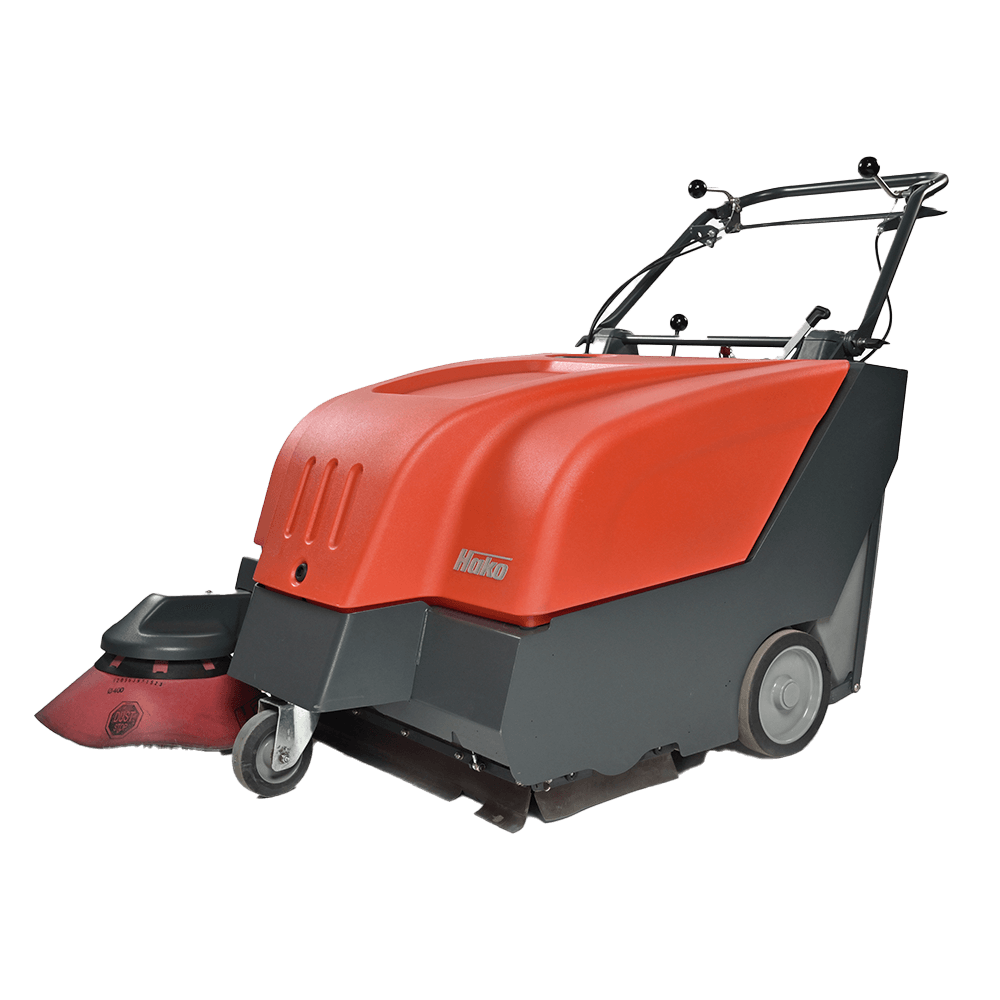
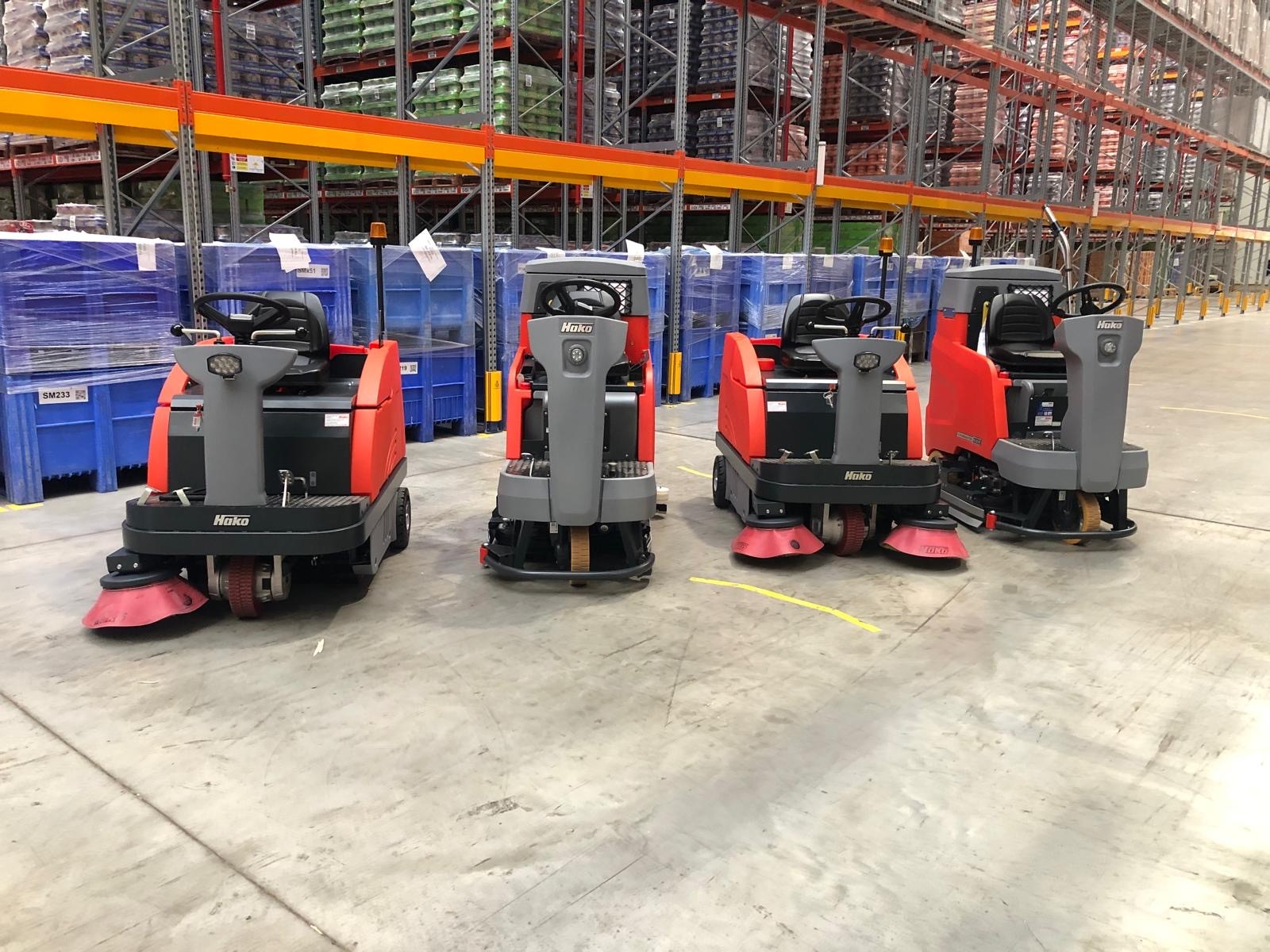
Dust Stop is compatible with Hako Sweepmaster and Scrubmaster models that are equipped with a pre-sweep or vacuum unit. This covers a significant range of machines across both pedestrian and ride-on configurations.
Dust Stop Compatible Sweepmaster Models
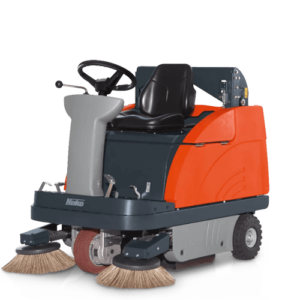
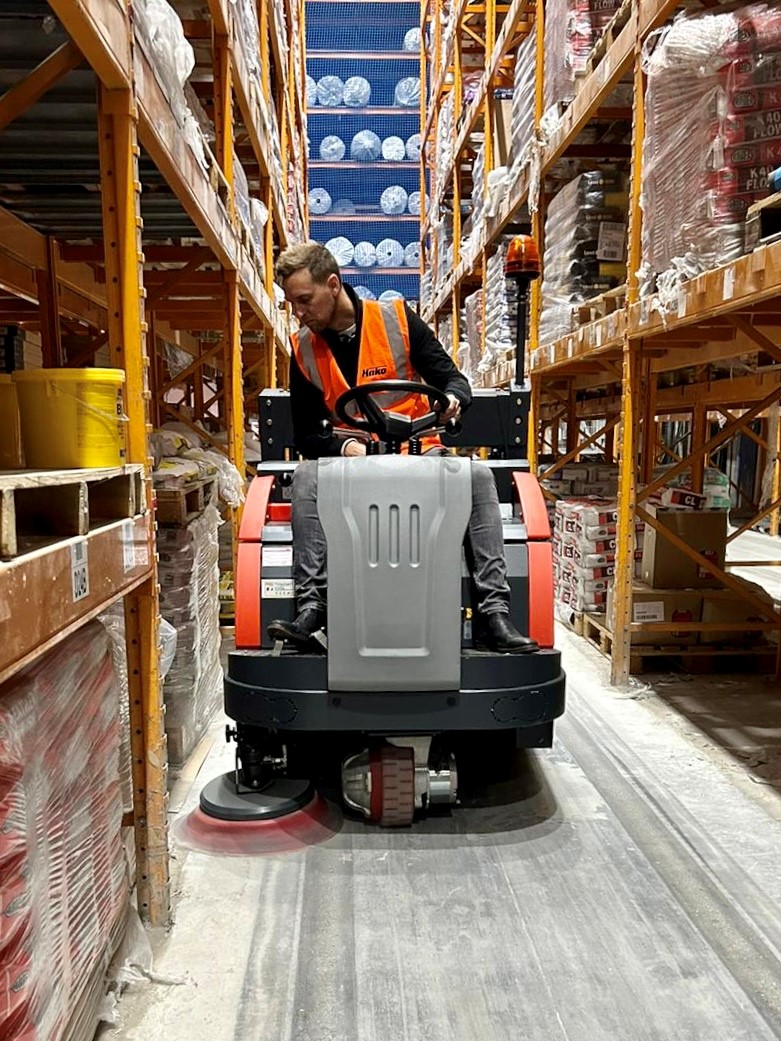
The Sweepmaster ride-on sweeper range includes models well suited to large warehouse and logistics environments. Dust Stop technology is available across the full Sweepmaster range when equipped with the pre-sweep unit, meaning every model can benefit from the 90% dust reduction capability. The Sweepmaster B980R, Sweepmaster 1200RH and Sweepmaster 1500RH are among the larger models in the range, capable of covering up to 16,200 square metres per hour, making them particularly well suited to the scale of cleaning required in distribution centres and large warehouse facilities.
Dust Stop Compatible Scrubmaster Models
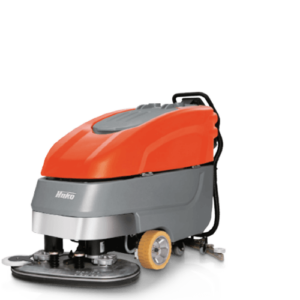
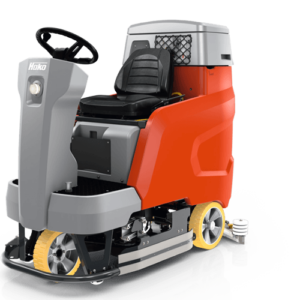
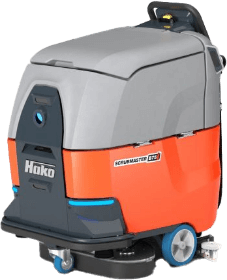
Dust Stop can also be used with Scrubmaster models that have a pre-sweep vacuum unit fitted. These machines sweep and scrub in a single pass and with Dust Stop installed, the dust reduction benefit applies during the sweeping stage of that process. The Scrubmaster B260R and Scrubmaster B400R are both large ride-on models built for warehouse-scale environments, covering significant floor areas in a single session and well suited to the throughput demands of busy logistics and distribution sites.
What Other Benefits Does Dust Stop Offer Beyond Dust Reduction
The dust reduction figure is the headline benefit of Dust Stop, but the technology delivers several additional practical advantages worth knowing about:
- No technical installation required. The jacket fits straight onto the existing side brushes of compatible machines with no wiring, no dust suction system and no specialist involvement needed. It’s straightforward to fit and change as part of a regular servicing routine, which means no downtime and no added complexity. For facilities where keeping machines running is a priority, the importance of regular servicing and maintenance is something Dust Stop sits comfortably alongside rather than adding to.
- Unrestricted sweeping close to walls. The jacket doesn’t get in the way of the machine’s ability to sweep close to walls, racking edges, or aisle ends. Wall-edge sweeping stays fully effective, nothing gets marked or damaged by the jacket material and the cleaning path isn’t reduced in any way.
- Quieter operation. The jacket also reduces the noise the side brush generates during use. In warehouses where machines run during working hours alongside staff and equipment, that reduction in noise makes a noticeable difference to the working environment over the course of a shift.
Taken together, these advantages mean Dust Stop improves the cleaning process without creating new complications or costs elsewhere. It’s a straightforward addition to a compatible machine that delivers meaningful benefits from the moment it’s fitted.
How Dust Stop Fits Into Your Warehouse Cleaning Strategy
Dust Stop tackles dust at the source, but how much dust a warehouse deals with overall depends on more than just the side brush technology on a sweeper. How often floors are swept, the routes machines take and how sweeping fits alongside other cleaning tasks all play a part in how well dust is kept under control day to day.
For warehouses looking to take a more planned approach to cleaning, our guide on creating an autonomous cleaning strategy is worth reading. It covers how to think about cleaning as an ongoing operational process rather than a series of individual jobs, which is where the real gains in dust control tend to come from. A well-planned schedule combined with Dust Stop-equipped sweepers gives a warehouse the best chance of keeping dust consistently low.
Why Dust Stop Won the Purus Innovation Award 2019
Dust Stop won the Purus Innovation Award in the Equipment category at CMS Berlin in 2019, one of the most recognised events in the professional cleaning industry. The jury awarded it for the combination of practical dust reduction and the genuine improvement it brings to occupational safety and day-to-day operational efficiency.
For facilities managers and procurement teams, that kind of independent recognition matters. It means the 90% dust reduction figure has been assessed by industry experts rather than resting solely on Hako’s own testing. The technology works and the award reflects that.
Hako’s Dust Stop technology addresses one of the most persistent and underestimated problems in warehouse cleaning by reducing dust generation during dry sweeping by up to 90% compared to conventional side brushes. The benefits extend well beyond cleaner air, covering worker health, stock protection, quieter operation and unrestricted wall-edge sweeping, all with no technical installation required.
If you’d like to find out whether Dust Stop is compatible with your current machines or explore the Hako range with it in mind, the Dust Stop page is the best place to start. The team is also happy to talk through the options directly if you’d prefer, so contact us today.